

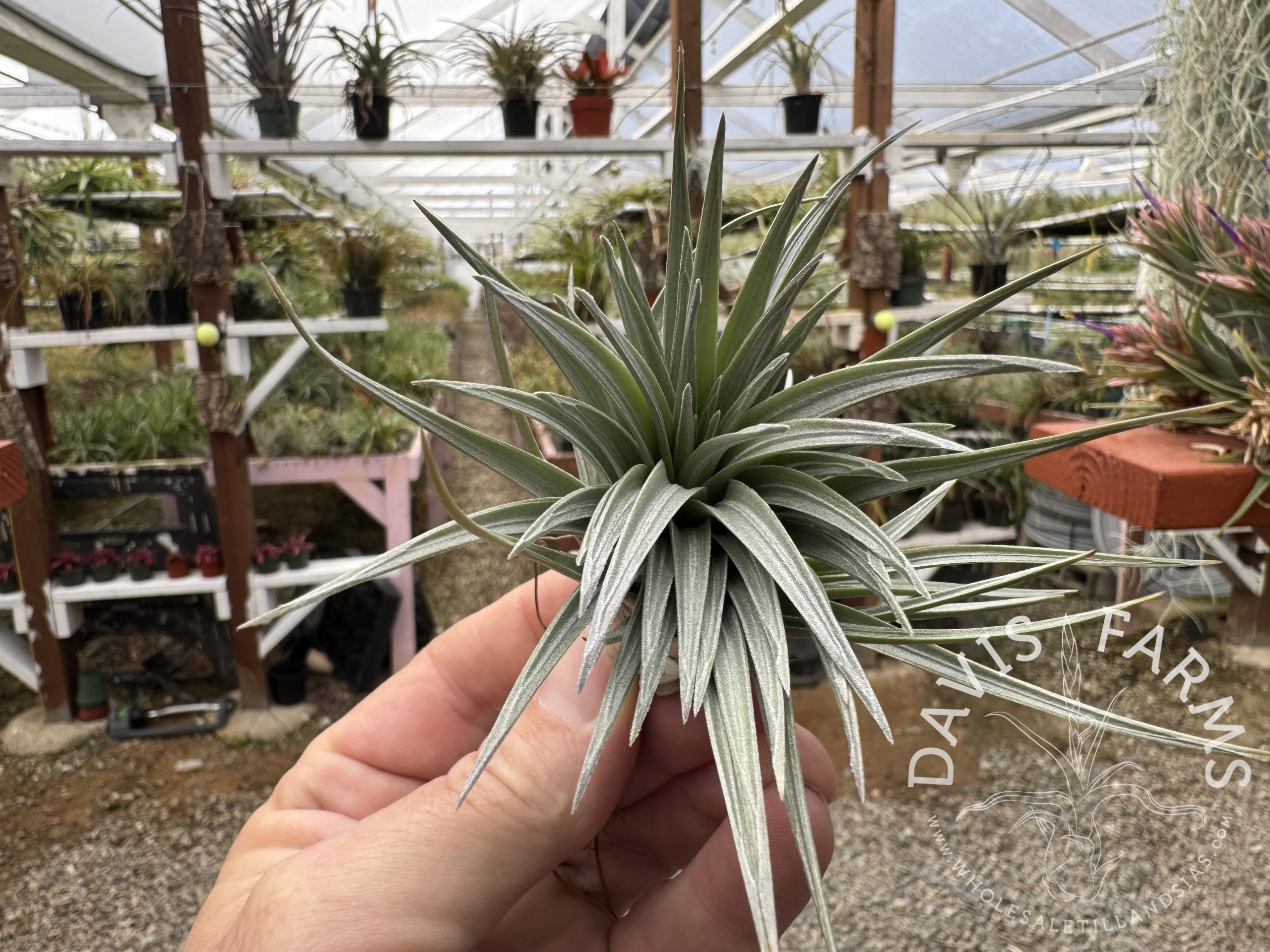
Tillandsia carminea ‘Dennis’
$ 6.75
DescriptionTillandsia carminea ‘Dennis’ is not a formally described wild species but rather a cultivar/trade name applied to a plant of uncertain botanical identity within the bromeliad hobby. Here’s the story:It was originally listed on the Tropiflora nursery catalog in the late 1980s as Tillandsia carminea, but it does not agree with the formal description of that species. The name “Dennis” was coined to differentiate it from the true T. carminea and as a reminder of the distributor — Dennis Cathcart in the USA. It was named by Derek Butcher in 1999 and is often referred to as T. carminea ‘Dennis’.The plant was imported into Australia by Keith Golinski at Bromagic in Queensland around 1990. When Derek Butcher finally obtained an offset and flowered it, he was surprised to find it produced white flowers (pale blue in bud), not the dark blue specified in Walter Till’s original description of T. carminea. He carefully dissected the flowers and measured all the key botanical features, comparing them against Till’s 1981 description in Pl. Syst. Evol. The plant differed in several significant ways: the posterior sepals were highly connate (fused for 9 mm out of 13 mm, versus only 2 mm in true carminea), the petals were virtually white, and the leaves were strongly carinate (keeled) under the blade. The filaments were also plicate (folded), a detail not even mentioned in the original description.Butcher concluded that it was likely a species of epilithic (rock-dwelling) habit, possibly from the Organ Mountains in Brazil — the home of T. carminea — and may have been misidentified in the field. The highly connate posterior sepals suggest it is more closely related to the T. tenuifolia complex than to T. carminea proper. As collector Peter Tristram noted, it is probably within the tenuifolia/araujei complex, with foliage that is superficially similar to carminea but with white, flared flowers like T. araujei.In short, Tillandsia ‘Dennis’ is a colloquially named air plant of uncertain wild origin — a “secund species” (with leaves arranged to one side) that likely belongs somewhere in the tenuifolia/araujei group, distinguished from T. carminea by its white flowers, highly fused posterior sepals, and keeled leaves. It remains a popular collector’s plant in Australia and elsewhere, though it has never been formally published as a new species, maybe it’s time!
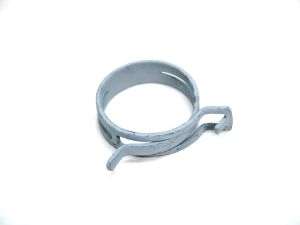 CLAMP, HOSE (55X15)
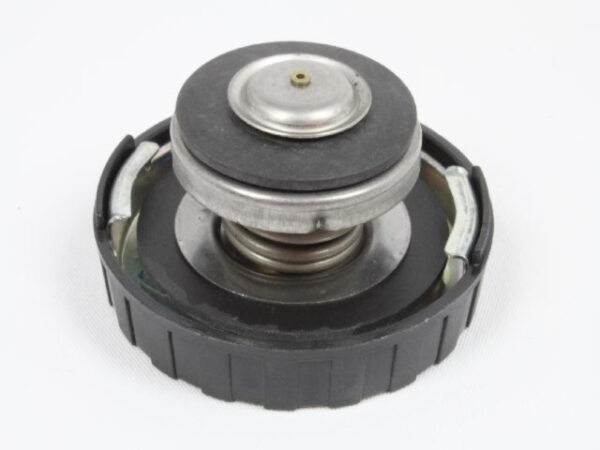 CAP, RADIATOR (COOLANT RECOVERY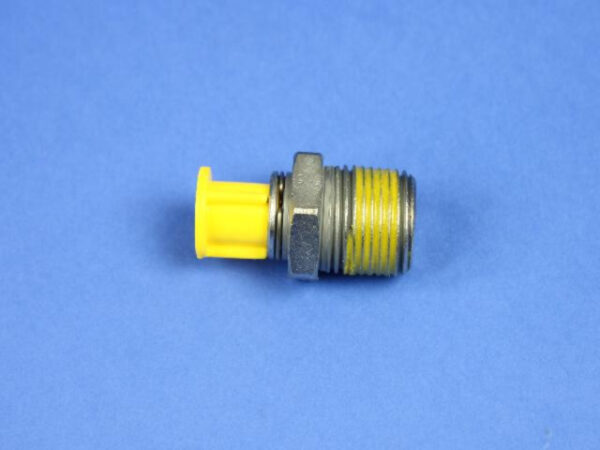
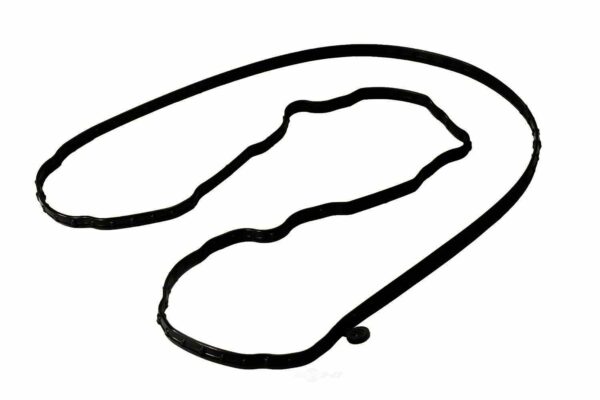 GASKET-VLV RKR ARM CVR

